
Examine the lining of your esophagus, stomach, and duodenum to help diagnose and evaluate digestive conditions.
An esophagogastroduodenoscopy (EGD), also called an upper endoscopy, is a procedure that allows your gastroenterologist to examine the lining of your esophagus, stomach, and duodenum (the first part of your small intestine). A thin, flexible tube with a small camera is gently guided through your mouth to help identify digestive conditions and evaluate your symptoms.
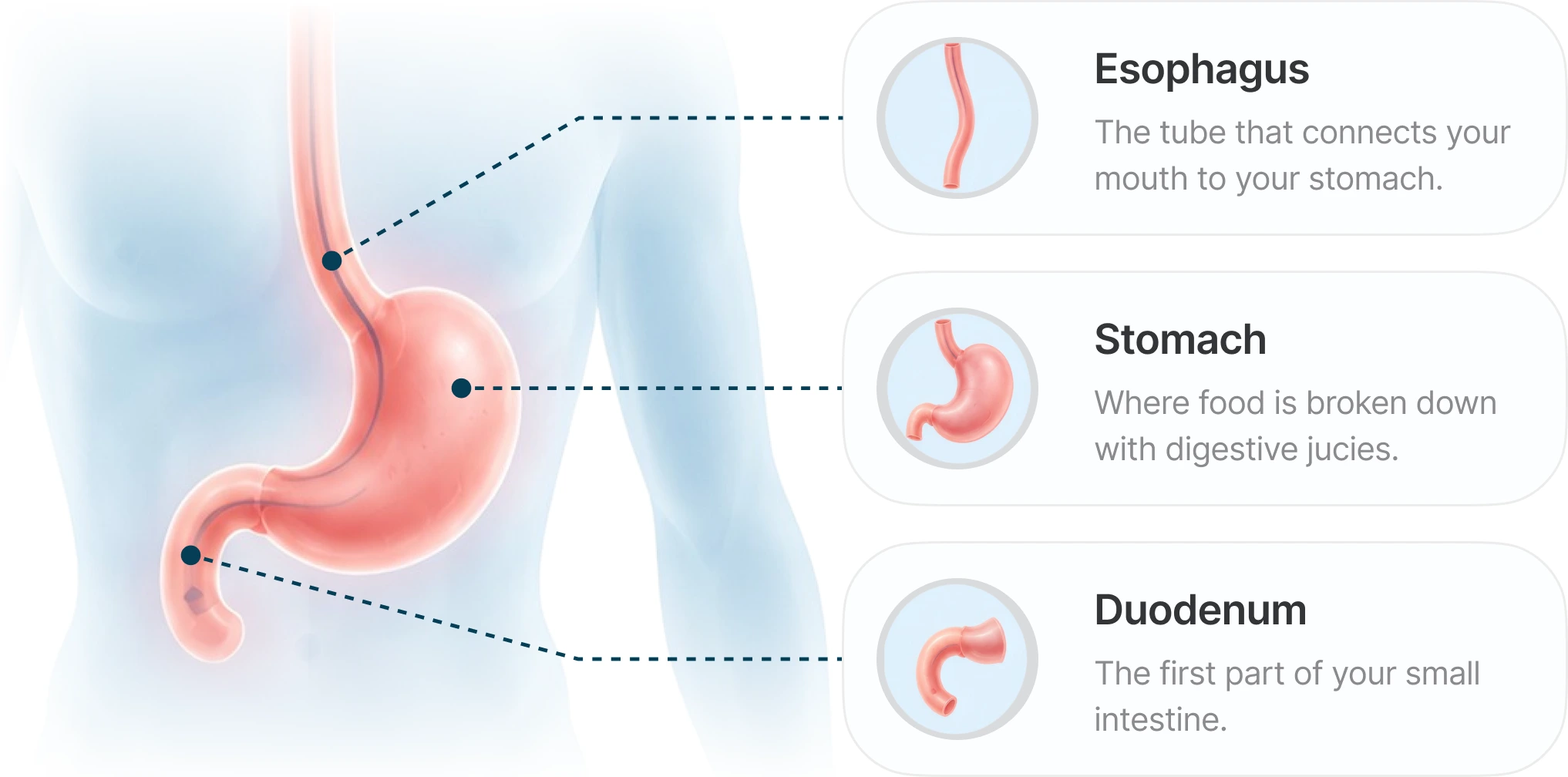
Your gastroenterologist will determine whether an EGD is appropriate based on your symptoms, medical history, and examination.
Your care team will explain each step and answer your questions so you know what to expect before your appointment.
We truly care about our patients and want them to communicate with us effectively. We also want to make sure they can easily access helpful information about their GI issues. If you have any concerns, we’re here to help. Book an appointment with us today!
*Please expect a call from your selected office to confirm your appointment details.*
We participate in most insurance plans. However, it is always a good idea to check with your insurance provider to make sure we are in your network. If you need help, our team is happy to guide you. We can also confirm if your preferred provider and selected office are in-network. To view a list of the major health plans we accept, click here.
A colonoscopy is a procedure that allows your gastroenterologist to examine the lining of your colon and rectum using a thin, flexible tube with a small camera. It helps detect abnormalities, investigate digestive symptoms, and identify precancerous growths before they develop into colorectal cancer.
A colonoscopy is a procedure that allows your gastroenterologist to examine the lining of your colon and rectum using a thin, flexible tube with a small camera. It helps detect abnormalities, investigate digestive symptoms, and identify precancerous growths before they develop into colorectal cancer.
A colonoscopy is a procedure that allows your gastroenterologist to examine the lining of your colon and rectum using a thin, flexible tube with a small camera. It helps detect abnormalities, investigate digestive symptoms, and identify precancerous growths before they develop into colorectal cancer.
A colonoscopy is a procedure that allows your gastroenterologist to examine the lining of your colon and rectum using a thin, flexible tube with a small camera. It helps detect abnormalities, investigate digestive symptoms, and identify precancerous growths before they develop into colorectal cancer.
A colonoscopy is a procedure that allows your gastroenterologist to examine the lining of your colon and rectum using a thin, flexible tube with a small camera. It helps detect abnormalities, investigate digestive symptoms, and identify precancerous growths before they develop into colorectal cancer.